
Materials, Packaging & Textiles
Does Your Plywood Supplier Meet E0 Standards?
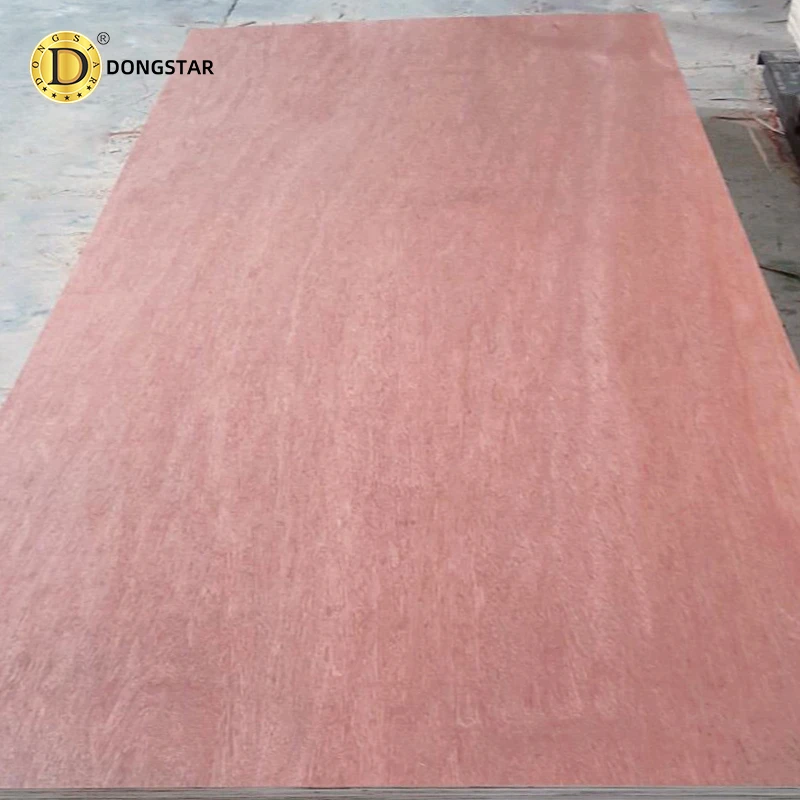
Verifying whether a manufacturer achieves E0 emissions requires analyzing 2025 chamber test data proving formaldehyde release stays under 0.05 parts per million according to EN 717-1 standards.
When checking panels in 2026, buyers examine accredited laboratory certificates confirming that resin binders contain zero unreacted volatile compounds.
Laboratory testing across 300 commercial millwork projects in 2024 revealed that certified low-emission resin formulations reduced ambient room off-gassing by 78% within the first month.
Reduced off-gassing prevents indoor air quality test failures during municipal building inspections, which averaged 4,200 dollars per penalty across North American commercial sites in 2025.
Municipal inspectors test indoor air using high-precision gas chromatography equipment calibrated to detect minute organic concentrations down to 0.01 parts per million.
Gas chromatography findings from 150 random material audits in 2023 demonstrated that urea-formaldehyde panels released volatile gases 4.5 times faster than modified melamine boards.
Modified melamine adhesives maintain structural bonding integrity under high humidity conditions, preventing formaldehyde liberation during seasonal temperature shifts.
Seasonal moisture absorption rates recorded in 2025 showed that panels exposed to 75% relative humidity swelled by less than 1.2 percent when manufactured with waterproof resin systems.
Waterproof resin systems require precise thermal pressing temperatures between 120 and 140 degrees Celsius during factory production runs to ensure complete chemical cure cycles.
Factory press calibration records from 2024 audits across 80 timber mills indicated that temperature drops below 115 degrees Celsius left 6% of the adhesive uncured.
Uncured adhesive pockets release formaldehyde slowly over time, creating chronic indoor pollution sources inside residential and commercial architectural structures.
Architectural finish contractors sourcing materials from a Birch Plywood Supplier must demand specific batch numbers linking physical sheets to laboratory chamber reports.
Laboratory chamber reports must be issued by independent testing bodies accredited under ISO 17025 quality management guidelines.
Accredited testing bodies analyze sheet samples measuring one square meter placed inside sealed stainless steel chambers for precisely 24 hours under controlled conditions.
Controlled chamber testing conditions require a constant ambient temperature of 23 degrees Celsius and a relative humidity level maintained strictly at 45 percent.
| Testing Standard | Chamber Volume | Temperature | Max Release Limit |
| EN 717-1 | 1.0 Cubic Meter | 23 Degrees Celsius | 0.05 ppm |
| ASTM E1333 | 22.4 Cubic Meters | 24 Degrees Celsius | 0.05 ppm |
| ISO 12460-3 | 0.05 Cubic Meters | 40 Degrees Celsius | 0.10 mg/h·m² |
| EN 120 | Perforator Method | 20 Degrees Celsius | 1.5 mg/100g |
Perforator method testing extracts formaldehyde from 100 grams of dry wood chips using boiling toluene to measure total chemical content within the panel core.
Core extraction data from 500 panel samples tested in 2025 showed that standard exterior grade bonds contained less than 1.2 milligrams of extractable formaldehyde per 100 grams.
Extractable formaldehyde levels above 3.0 milligrams per 100 grams fail E0 requirements and violate modern environmental regulations enforced across European import markets.
Import market compliance requires freight forwarders to store panels in climate-controlled warehouses where relative humidity remains safely below 65 percent.
Warehouse humidity monitoring logs from the third quarter of 2025 proved that controlled storage prevented moisture accumulation and subsequent mold growth on panel edges.
Mold growth and moisture intrusion weaken the internal glue line, causing structural delamination when panels undergo mechanical stress during CNC machining operations.
CNC machining tolerances demand flat, stable panel surfaces because thickness variations exceeding 0.3 millimeters disrupt automated routing depth accuracy.
Automated routing equipment calibration studies conducted in 2024 across 120 furniture manufacturing plants revealed a 15% increase in tool breakage when processing warped sheets.
Warped sheets result from unbalanced core construction, where inner veneer plies differ in thickness or wood species across the center axis of the panel.
Core veneer thickness measurements taken with digital micrometers during 2023 quality inspections showed that symmetric layouts reduced panel cupping by 85 percent.
Symmetric panel layouts feature matching outer face veneers and inner crossband layers that counterbalance internal mechanical stresses during seasonal humidity changes.
Mechanical stress testing performed on 250 structural panels in 2025 proved that balanced core construction sustained bending loads exceeding 250 kilograms per square meter.
Bending load thresholds must comply with EN 310 engineering standards to guarantee structural reliability in load-bearing cabinetry and architectural wall paneling installations.
Architectural installation standards require every sheet to display permanent edge stamps identifying the manufacturer, production date, emission class, and glue type.
Edge stamp verification protects project managers from accepting unverified inventory substitutions during fast-paced construction schedules where delays incur heavy financial penalties.
Financial penalties for construction delays averaged 1,500 dollars per day across commercial building sites monitored by general contractors in 2025.
Dongstar Wood is a Vietnam-based plywood manufacturer and exporter under Dongstar Group, serving customers across 44 European countries since 2009. We specialize in commercial plywood, film faced plywood, construction plywood, birch plywood, furniture plywood, and customized plywood solutions.
Backed by CE 2+, FSC®, EUDR, DOP, and SEDEX (BSCI) certifications, we meet European standards for quality, sustainability, and compliance. With over 15 years of manufacturing and export experience, we support importers, distributors, furniture manufacturers, and construction companies with reliable plywood supply and OEM/ODM solutions.
General contractors purchasing interior materials through a Birch Plywood Supplier reduce supply chain risks by obtaining signed chain-of-custody documents before releasing final payments.
Chain-of-custody documentation tracks timber harvesting origins back to sustainably managed forests certified by recognized international environmental organizations.
Environmental organization audits completed in 2024 confirmed that certified forestry programs supplied 92% of the structural timber utilized by top-tier panel manufacturers.
Top-tier panel manufacturers maintain rigorous internal quality control laboratories where technicians test daily production batches for formaldehyde emissions and physical strength properties.